


Transportation insecurity has important consequences for people’s ability to connect to opportunity and flourish. Everyday we are learning more about what causes this hardship, who is experiencing it, how it is impacting people and communities, as well as what interventions are effectively moving people to transportation security.

-

2025 Community Transportation Needs Assessment for the State of New Hampshire.
The 6-question TSI is being included in this statewide assessment, led by Impact Consulting in partnership with the New Hampshire State Commission on Aging.
-

An Assessment of Data, Tools, and Metrics for Equity in Decisions About Surface Transportation Investments
A 2025 consensus study of the National Academies of Sciences, Engineering and Medicine on data, tools, and metrics for making fair decisions on surface transportation investments evaluates the Transportation Security Index. Conclusions of the study include a recommendation that Congress and the U.S. Department of Transportation fund (1) the pilot testing of tools like the TSI to measure transportation insecurity and (2) the evaluation of the impact of transportation investments on transportation insecurity using such successfully piloted tools.
-

How Does Transportation Insecurity Compare and Relate to Other Indicators of Material Hardship in the U.S.?
An article published in Social Indicators Research is the first to examine transportation insecurity alongside other forms of material hardship (i.e. food and housing insecurity, utility shutoffs). Findings show that transportation insecurity is among the most prevalent forms of hardship, that the demographic groups likely to experience it are also likely to experience other forms of hardship, that transportation insecurity and food insecurity are the hardships most likely to co-occur with other hardships, and that transportation insecurity is associated with physical and mental health at a similar magnitude as is food insecurity and having unmet medical needs.
-
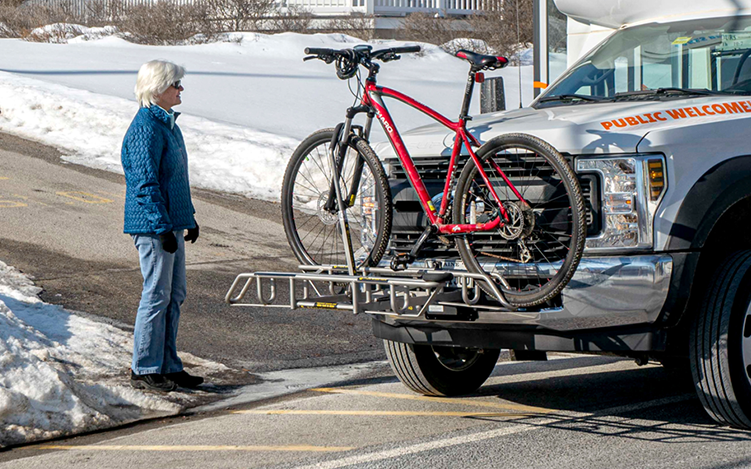
How Transportation Barriers are Hurting Maine and How We Move Forward
Report from Moving Maine shows that in 2024, 2 in 5 Mainers experienced transportation insecurity with rates being notably high among people between 18-24 years of age and those with disabilities. Report details the association between transportation insecurity and economic opportunity, health, and social isolation.
-
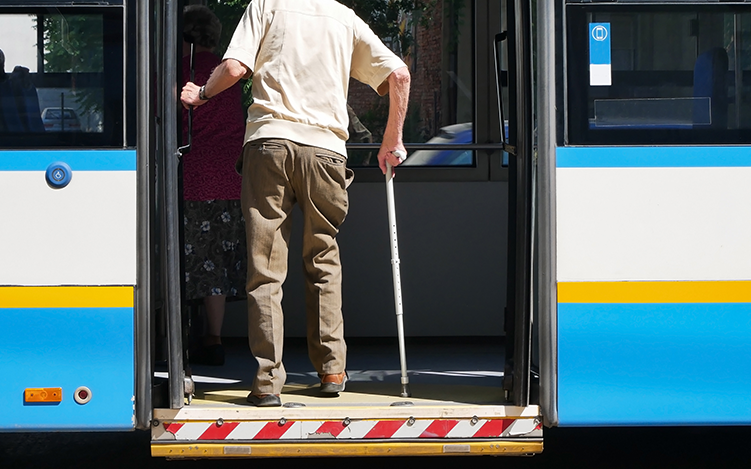
2026 wave of the Health and Retirement Study
The 6-question Transportation Security Index is being included on a Health and Retirement Study (HRS) transportation module that will be fielded in 2026. The University of Michigan’s HRS is a longitudinal panel study that surveys a representative sample of roughly 20,000 people over the age of 50 in the United States every two years, collecting data on such topics as wealth, health, family connections, work, and more.
-

Opportunities to Improve Patient Transportation Access: Piloting a Transportation Resource Fair with the Saban Community Clinic
Findings from a pilot conducted by the University of Los Angeles’ Lewis Center for Regional Studies showed that although patients who attended a transportation resource fair at the Saban Health Clinic faced numerous transportation barriers in accessing health care, the average transportation insecurity score among those surveyed indicated low insecurity. This data suggests that those with higher insecurity were not able to attend the event. Strategies for reaching patients, including those with high insecurity, are discussed.
-

The international standard for identifying health measurements, observations, and documents recognizes TSI.
Following recommendation’s from the Gravity Project, in 2025 The TSI-16 and the TSI-6 were both encoded in Regenstrief’s LOINC (Logical Observation Identifiers Names and Codes). LOINC provides organizations working in healthcare settings with a universal set of codes related to measurement that enables different systems to exchange consistent information.
-
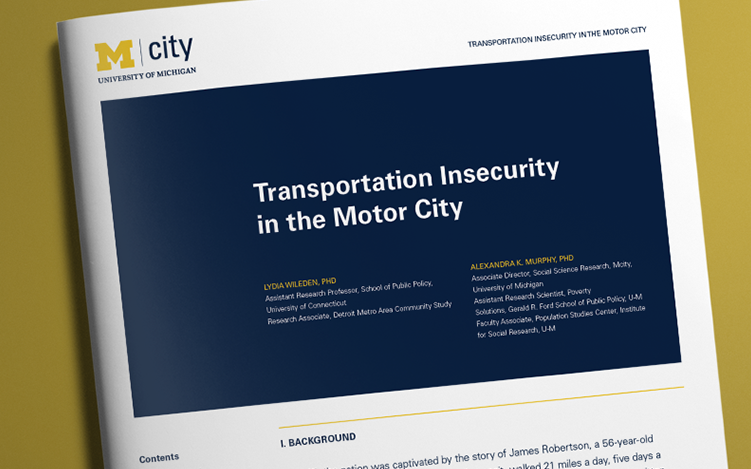
Transportation Insecurity in the Motor City
White paper examining what transportation insecurity looks like in Detroit, including its prevalence and its relationship to mode use and transportation costs. Findings show 1 in 3 Detroiters experienced transportation insecurity in 2023.
-
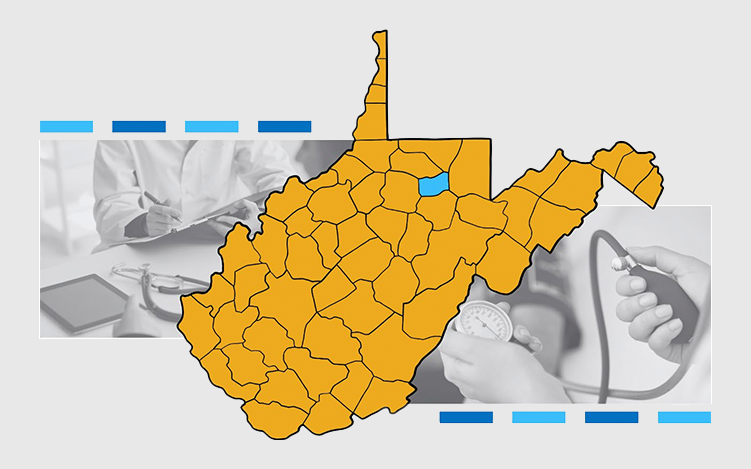
Grafton County West Virginia Community Health Needs Assessment
Findings show that residents with incomes below $49,999 are significantly more likely than those with higher incomes to report skipping trips, rescheduling appointments, not being able to leave the house, and having their relationships impacted because of problems with transportation.

New Hampshire is one of the fastest-aging states in the country. The TSI is giving us, for the first time, a way to gather local, nuanced data about transportation insecurity and unmet transportation needs, especially as more residents age in place here. That’s going to be essential to effective planning and investment moving forward.
JEN BUTEAU
Impact Consulting, which is using the TSI in a statewide assessment in partnership with the New Hampshire State Commission on Aging.